About Me

My photo
Dominick Graziano has degrees in biology, philosophy and law. He is a member of the Florida Bar, and is Of Counsel with the firm of Bush Graziano Rice & Platter, P.A., www.bgrplaw.com.

Sunday, September 13, 2020

Virtue, Voting, and the Lawyer's Oath


    Virtue, Voting, and the Lawyer’s Oath


                                   Oath of the Horatii - Wikipedia


     Aristotle famously said “man is a political animal,” by which he meant that the virtuous life can only be lived in the company of others. One can be a solitary philosopher, but by their very nature virtues can only be exercised and developed within a social organization. And as many of these blog posts have discussed, only a person who lives a morally good life can live a happy fulfilling life.

    Aristotle readily acknowledged that living a virtuous life is not easy, because it requires living under the right conditions. Just as an acorn needs the right soil and light to germinate and grow, so too does a person require the proper environment to live virtuously.[i] The proper conditions do not arise by accident. Rather, they must be rationally structured by and within the community (or as Aristotle called it the ’polis’). According to Aristotle man’s unique ability to speak and reason, unlike other animals, gives humans the ability to create a just society.[ii] It is our ability to speak and reason with one another that enables us to “discover what is right and wrong, what is good and bad, and what is just and unjust.”[iii] It is therefore incumbent on the citizens of a community to be politically active through education and reasoned discussion to help mold a community that promotes, supports and encourages the virtues of its members and leaders.

    While democracy in ancient Athens and other Greek city-states was a novel experiment in governing and evolved over time, its foundation was always one of public debate and discussion. This ‘rational’ process formed the basis for selecting leaders and legislators from which the governing laws and customs were established. Most importantly, Aristotle understood that this was not a static process and as a practical matter society would evolve over time thus requiring ongoing debate and discussion. Nonetheless, the goal was always one of developing leaders and political institutions that would provide the conditions for nurturing virtue within its citizens. A citizenry so constituted gives each member a stake and responsibility to ensure that its laws and educational system inspire virtuous acts creating a community in which its members can live a ‘happy’ life.

    It is no accident that our Declaration of Independence begins with the words “We hold these truths to be self-evident, that all men are created equal and endowed by their creator with certain unalienable Rights, that among these are Life, Liberty, and the Pursuit of Happiness.” While Thomas Jefferson penned these words, they were in part inspired by Aristotle’s ideas. The Founding Fathers, especially Jefferson, were familiar with and admired Aristotle’s political philosophy. Indeed, both the Declaration of Independence and the Constitution expressly adopt Aristotle’s idea that a democratic republic should be structured to nurture the ‘pursuit of Happiness.’ Here it is important to note that what Aristotle meant by ‘happiness’, as well as Jefferson, was more like ‘human flourishing’, i.e., providing the conditions necessary for citizens to lead a virtuous life.[iv]

    In our modern world you would be hard pressed to find a voter or legislator whose actions are primarily directed at building a society that promotes the ‘pursuit of Happiness’ of all its members. In place of an overarching principle guiding political discussion and decisions we typically break down along party lines over a laundry list of special interests. But this need not dissuade us from reaching for higher ideals, because it is the higher ideals upon which the ‘American Experiment’ was founded, and which could guide us towards higher moral ground. So where can we find a ‘North star’ for our moral compass? For lawyers, legislators and members of the Executive branch it is hiding in plain sight.[v]  

    Lawyers throughout the United States take an oath that contains these or similar words: ”I do solemnly swear: I will support the Constitution of the United States….” (for legislators, the judiciary and executive officers the words ‘and defend,’ are added). Since ancient times an ‘oath’ was considered a pledge of constancy to the vow taken under providential penalty.[vi] In this instance it is a moral promise to “support[vii] the Constitution”, i.e., to ‘promote the interests or causes’ of the Constitution. To fulfill this moral obligation requires a literal reading of the Constitution and a working knowledge of it. This is accomplished by reflecting on how we as individuals having sworn an oath can align our conduct and decisions with the Constitution’s primary purposes. This moral undertaking by its terms is not limited to our professional lives, but also our lives as active members of the communities in which we live. Thus, if the Constitution commands us to ‘promote the General Welfare’, i.e., the common good then we should align our civic conduct with that mandate.[viii] How can we accomplish this? 

    First, we should periodically reflect on the meaning and significance of the document which we have pledged to support. This requires developing a working understanding of affirmative conduct we must undertake to live up to our pledge, as well as avoiding conduct which could compromise our promise.

    Second, when confronted with situations in which our oath may be tested, we must be vigilant in upholding our oath. In our everyday activities we will not often face circumstances that challenge this moral obligation. But there are occasions, such as voting, where we will be called to account. For now we can skip a discussion albeit important on whether we have a moral obligation to vote.[ix]   We cannot however avoid the moral imperative of our oath when deciding who to vote for. Why? We know that almost without exception candidates once elected will take an oath swearing allegiance to the Constitution, and will be making decisions that will likely effect the lives of members of our community. And as detailed above that oath bids them to promote the General Welfare of all by making decisions that will help create a society that nurtures human flourishing, i.e., that encourages living lives of virtue.

    Accordingly, if we have reason to believe that a candidate will not satisfy the moral obligation of their oath, then it would be a violation of our oath to vote for them. Any candidate worthy of our vote must pass this initial test before other considerations (policies, party, etc.) effect our decision making. If we truly value the ideals of our democratic republic that our oath demands of us, we must comport our decisions consistent with it.


[i] Aristotle, Nichomachean Ethics, I.7; Politics, I.2.

[ii] We now have reason to think that other animals also have these abilities. See, e.g., Frans de Waal, Mama’s Last Hug: Animal Emotions and What They Tell us About Ourselves (2018).

[iv] https://www.britannica.com/topic/common-good; also sometimes stated as the ‘common good.’

[v] Voters too, in some states such as Florida, take an oath of allegiance to support the Constitution.

[vi]  Language of the oath probably originates from the Bible, Numbers 30:2: “When a man voweth a vow unto the Lord, or sweareth an oath to bind his soul with a bond, he shall not break his word….” See Generally Wikipedia, “Oath.”

[vii] Merriam-Webster dictionary.

[viii] Aristotle’s ideas were filtered through the writings of John Locke, who directly influenced the founding fathers. See generally, “Happiness and Pleasure”, The Dictionary of the History of Ideas, Vol. II, pp. 379 et. seq.

[ix] For an interesting discussion on this point see Brennan, ‘The Ethics of Voting (Princeton, 2012), who argues that “Citizens who lack the motive, knowledge, rationality, or ability to vote well should abstain from voting.” He is careful to separate this from the legal right to vote.


References

Sheppard, Steve, I Do Solemnly Swear-The Moral Obligations of Legal Officials, (Cambridge, 2009).

Hall, Edith, Aristotle’s Way-How Ancient Wisdom Can Change Your Life, (Penguin Press 2018).

Gessen, Masha, Surviving Autocracy, (Riverhead Books, 2020), in which the author argues that repairing the damage done to American democracy will require rediscovering its “moral aspirations” and “ the belief this can be a country of all its people.”

Benton, Josiah Henry, The Lawyer's Official Oath and Office, (Boston Book Company, 1909) 

Image: Oath of the Horatti, Jacques-Louis David (1784)


Thursday, May 28, 2020

About those 80,000 hours...

Rembrandt, Aristotle with a Bust of Homer (article) | Khan Academy


               "When time is broken and no proportion  

kept!....I wasted time, and now time doth waste  

me."-Shakespeare, Richard II, Act 5, Scene 5


     Aristotle's ‘good life’ is guided by virtue. The virtues have been discussed in these blog posts, but how many of us guide our lives by them? When was the last time you reflected on them, or sat down over a beer or a glass of wine and discussed them with friends? Or asked yourself, ‘how am I doing?’ We rarely discuss living a ‘good life’ because we never take the time to define what that means for our individual lives. In the modern world few are interested in such things, not even you dear reader.  

     In truth, our society does not value reflecting on what it means to live a good life. Rather we are taught and told what it is. Go to school, get good grades, then a job, etc., etc. In between have some fun. Near the end maybe you’ll have a little money so you can sit around accomplishing nothing while waiting to die. So if you do not define your ‘good life,’ it will be done for you.

     Socrates said “the unexamined life is not worth living.”[i]  Socrates offered these words as his defense for charges of ’impiety and corrupting the youth’ while practicing philosophy on the streets of ancient Athens over 2400 years ago. He was found guilty and sentenced to death for questioning how Athenians were living their lives. (Such inquiries have rarely been encouraged, even today.)  Unlike Socrates, our physical lives are not at risk for philosophical self-examination, for holding ourselves accountable to living a ‘good life,’ but we rarely do so. And yet we readily accept being accountable to others.    

     Lawyers, as well as other professionals, are accountable to their employers and clients for their time in order to be compensated. Indeed most professionals will ‘log’ about 80,000 hours on average (totaling 9 years) during their working lives.[ii] These time ‘logs’ are useful for getting compensated but nothing more. If someone picked up all 9 years’ worth and read them they would learn virtually nothing about who the person was, what they thought, or whether they had lived a ‘good life.’ Logging 9 years’ worth of time offers little towards determining whether or not you are leading a ‘good life.’ To do that requires reflection.  

     The Stoic philosopher Seneca wrote “I will keep constant watch over myself…and will put each day up for review.”[iii] Seneca defined his ‘good life’ by living according to Stoic philosophy.  At the end of each day he would take a few minutes to hold his life up to account, to reflect on whether he was being true to himself, living the life he chose. When this activity is suggested the usual refrain is ‘I'm too busy’ or ‘I don’t have time.’ Of course this is often said by those who will spend 2 days, 22 hours and 18 minutes watching Game of Thrones, or checking social media throughout their ‘busy’ day.[iv] 

     Have you wasted time? Imagine looking over your past through time’s distant mirror and seeing all the wasted time piled up. Those ‘piles’ represent your then future self. The self that wasn’t. You owed that wasted time to your future self to develop a philosophy of life, then to hold yourself to account, and to put your life up for regular review. Don’t let another day, week or month get added to the mounds of time you have already wasted by not setting goals and standards for directing your life. Aristotle said “you cannot judge a [persons] life until it is completed.”[v] So if you are reading this it is not too late to define your ‘good life,’ and to begin living it.


[i] Plato, The Apology

[ii] 80,000hours.org

[iii] Seneca, Moral Letters, 83.2

[iv] https://www.komando.com/downloads/binge-watchers-find-out-how-long-your-show-will-take-to-finish/469781/; on average the daily time spent on social media is 144 minutes a day; The Roman Emperor Marcus Aurelius ruled over the greatest empire of the ancient world and yet found time to reflect on his daily activities, to hold himself to account. These personal journals were kept for the purpose of self-improvement and for reflection on living his life according to Stoic philosophy.[iv]  He was loyal to this daily habit even while on military campaigns.               

https://www.broadbandsearch.net/blog/average-daily-time-on-social-media.         

[v] Aristotle, Nicomachean Ethics, 1097b-1098ai9. Aristotle understood that our decisions, how we live our lives, has ramifications beyond out mortal lives, and thus a life might not be ‘complete’ until well after death. Or as Russell Crow said in the movie Gladiator, “what we do in life, echoes in eternity.” https://www.youtube.com/watch?v=CDpTc32sV1Y

Painting, Aristotle with a Bust of Homer, Rembrandt


Thursday, May 21, 2020

You won the lottery, now what?


     The Persistence of Memory - Wikipedia


             “People are frugal in guarding their personal property, but as soon as it comes to squandering time they are most wasteful of the one thing in which it is right to be stingy.”


     One in 400 trillion. Those are the odds of you being born.[i] You won the biggest lottery of all time the day you were born, but no one told you. Then consider that many cosmologists contend that there is no evidence for other intelligent life in the universe. You won not only the greatest lottery on earth, but in the entire universe. So what have you been doing with the winnings-the time of your life?  Have you been squandering it like so many state lottery winners?

     Abraham Lincoln reportedly said “a lawyer’s stock in trade is [her] time.” He could have said that about everyone, not just lawyers. All we ultimately have in this life is our time, and how we choose to spend it. In the end it might seem that our lives were all too short, but as the Roman philosopher Seneca wrote 2000 years ago:

           “It is not that we have a short time to live, but that we waste a lot of it. Life is long enough, and a sufficiently amount has been given to us for the highest achievements if it were all invested. But when it is wasted in heedless luxury and spent on no good activity [binge watching Netflix?], we are forced at last by death’s final constraint to realize that it has passed away before we knew it was passing. So it is: we are not given a short life but we make it short, and we are not ill-supplied but wasteful of it…Life is long if you know how to use it.” [ii]

      It is our life so we have the moral obligation to decide how to spend the time of our life. Unfortunately, too many of us rarely if ever reflect on how we should spend it. Instead, the lottery winnings are mindlessly frittered away day after day, week after week, year after year.[iii] We unwittingly treat each passing moment the same, as if they are all of equal value, but they’re not. Each day, week, month and year we spend makes the next, of necessity, more valuable, because our life and the projects we fill them with, are finite.[iv] Yet we tend not to treat them that way.  We live habitually, not mindfully.

     In his thought provoking book, This Life: Secular Faith and Spiritual Freedom, Martin Hagglund places our life choices in terms of what it means to be a free human being:

        “….we are free because we are able to ask ourselves what we ought to do with our time. All forms of freedom-e.g. the freedom to act, the freedom to speak, the freedom to love-are intelligible as freedom only insofar as we are free to engage the question of what we should do with our time.”[v]

To live freely requires that we confront the moral challenge of choosing how to spend the time of our finite lives. If you do not feel free, perhaps it is due in part to not reflecting on this profound question. Consider that the one thing that truly “belongs to each of us is not property or goods, but the time of our life.”[vi] Certainly, reflecting on this is worth some of your time?


[ii] Seneca, On the Shortness of Life

[iii] To get a vivid look at the calendar of your life see Tim Urban’s startling look at the brevity of your time: https://waitbutwhy.com/2014/05/life-weeks.html

[iv] Martin Hagglund, This Life: Secular Life and Spiritual Freedom (2019)

[v] Id. at 23.

[vi] Id.

Painting, Salvador Dali, The Persistence of Memory


Thursday, May 14, 2020

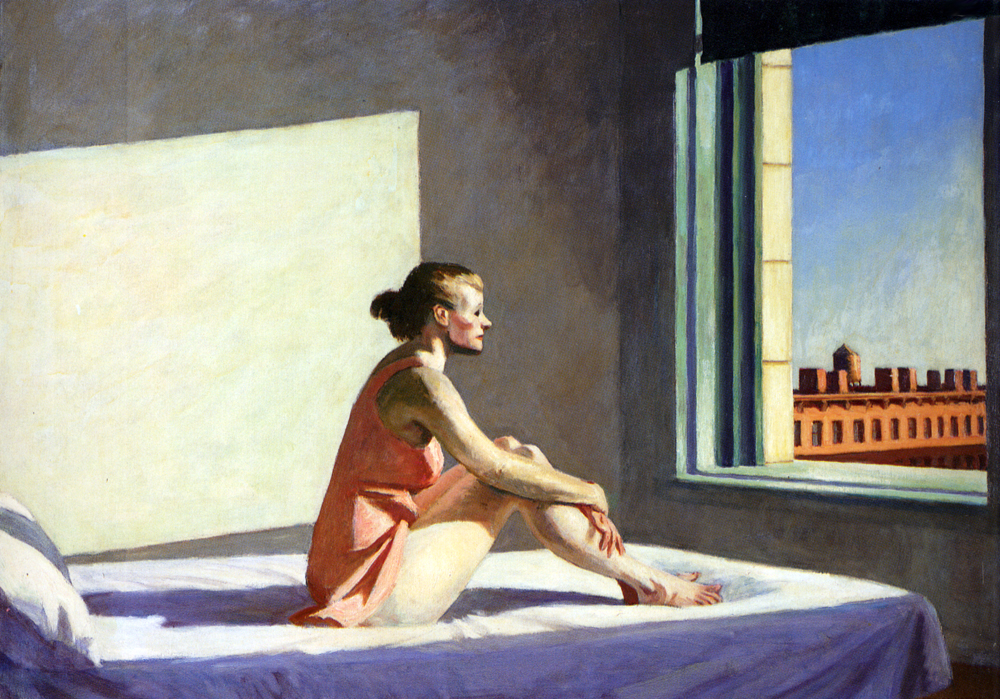
Virtue in the Time of a Pandemic


uploads5.wikiart.org/images/edward-hopper/morni...


I judge you unfortunate because you have never lived through misfortune. You have passed through life without an opponent-no one can ever know what you are capable of, not even you. - Seneca


     This Blog Spot began as an exploration of how Aristotle’s twelve virtues apply to the practice of law. In point of fact, however, Aristotle’s virtues were meant as a guide for leading a “good life.” Aristotle’s touchstone for what constitutes a “good life” was the ancient Greek notion of “eudaimonia”, which is often translated as “happiness” or “flourishing.” Eudaimonia is derived from the Greek words for ‘good’ (eu) and ‘spirit’ (daimon). So for Aristotle leading a ‘good life’ involves developing a ‘good soul.’

     Aristotle’s “good life” is achieved by living virtuously. That is, the ‘good souls’ are those whose lives are guided by virtues such as “courage” (doing what is right under difficult circumstances), “temperance” (throttling emotions by showing restraint and self-control), “liberality” (being charitable and generous, i.e. being kind), etc.  Of his twelve virtues these three are especially relevant during a pandemic. Why?

     In our humdrum everyday lives we are not often compelled by circumstances to exhibit courage, self-restraint, generosity and charity. On a typical day most of us might not have the opportunity to practice these virtues. The great Stoic philosopher Seneca wrote:

     “Misfortune has a way of choosing some unprecedented means or other of impressing its power on those who might be said to have forgotten it….Since it is unfamiliarity that makes a thing more formidable than it really is, this habit of continual reflection [on the travails that will befall us] will ensure that no form of adversity finds you a [completely unprepared]. “

Indeed, recognizing this the Stoic philosophers would intentionally put themselves in challenging situations to prepare themselves for the “hard times” they knew life would inevitably and unexpectedly present. In this way they could practice virtuous behavior in the “good times” to be able to live by them during the “hard times.”

     The Stoic philosophers also recognized, however, that even without mental training for life’s unexpected events, we could still use the “hard times” to burnish our virtues. As the philosopher and Roman Emperor Marcus Aurelius said: “Just as nature takes every obstacle, every impediment, and works around it-turns it to its purposes, incorporates it into itself-so, too, a rational being can turn each setback into raw material and use it to achieve its goals.” So to what good can we put our experience of the Covid 19 pandemic? What lifelong goals can this unprecedented experience help us achieve? Can we use this unique challenge to make us and our community better, more virtuous? Aristotle would say ‘yes.’

      Aristotle famously said “man is a political animal.” He did not mean by this that we should actively participate in politics. Rather, he believed that humans could only flourish, i.e. achieve “eudemonia”, as part of a close knit community that agreed on certain rules and customs, or as the Greeks termed it a “polis.” You can think of the modern “polis” as a series of concentric circles consisting of family at the center, then friends and neighbors, our work environment, and the community in which we live.  Importantly, it is only as a member of a polis that we can act virtuously and achieve being "good souls." With this view in mind we can see that finding it within ourselves to show self-restraint, act courageously and charitably has the potential to make us “good souls” while also enabling those in our “polis” to flourish. Thus, living in the time of a pandemic has given us the opportunity to practice our virtues, to be better members of our polis, and to become "good souls."
It is up to each of use to take advantage of this rare opportunity to be challenged, to become better, and to bring us ever closer to achieving the "good life."
        

Painting, Edward Hopper, Morning Sun

Friday, April 24, 2020

Capturing Your Life


"In the diary you find proof that in situations which today would seem unbearable, you lived, looked around and wrote down observations, that this right hand moved then as it does today, when we may be wiser because we are able to look back upon our former condition, and for that very reason have got to admit the courage of our earlier striving in which we persisted even in sheer ignorance." —Franz Kafka, The Diaries 1910-1923


      Does it feel like you have more time right now? Your life has slowed down a bit. Not so many social obligations to soak up your ‘free’ time. What are you doing with this supposed ‘free’ time? Binge watching Netflix, checking social media more often, or just sitting around figuring out what to do next.
      
      No matter what it feels like, you do not have more ‘time’. In fact each day you have less time. Less ‘life-time.’ We are each allotted only so much ‘life-time.’ The irony is we don’t know how much. Yet we act as though our ‘life-time’ will never end. We use it up as though it is free and unlimited. It’s not. Each day that passes is one day less that we have. One day we will never get back.


      So how did you use that day? Yesterday. Do you remember? How about those seven days last week? Last month? Last year? You’re not getting them back. They’re ‘spent.’ Gone forever.Yes, whether you realize it or not the most valuable thing you have is ‘time.’ And you only have so much to ‘spend.’ You can’t save it. You can only ‘spend’ it. And every moment once spent is gone forever. And one day too, so is your life. You probably don’t want to think about that, but you should. There will come a last time for everything. The last time to enjoy your favorite meal. The last time to hear the voice of someone you love. The last time you will have the opportunity to be kind, to forgive, or tell someone you love them. Yes, there will be ‘the’ last time for everything in our lives. We just don’t know when.  


      There is a way to capture the ‘time’ of your life, however. To hang on to some of it. To weave it into a tapestry. And that is to write about it. Not all of it. Not every moment of course. But just enough so perhaps you remember more of it. A way to learn about who you are from the way you spend your ‘invaluable’ time. Keeping a journal of your life allows you to remember what was important, what you thought, what you did, what you accomplished, and who you spent time with. Keeping a journal helps to reflect on who were, who you are, and who you are becoming. The habit of keeping a journal might even help you appreciate that some things you did yesterday may never happen again.
     
     The Stoic philosophers were keenly aware of the fleeting nature of our existence, and that we do not live our lives consistent with this unwavering fact. Their principles of ‘time’  awareness can be summarized as follows:
1.    Momento mori-remember that you are mortal and will someday die;
2.    Time is more valuable than possessions, treat it that way;
3.    Say NO to things that don’t matter;
4.       Reflect on each day, so you can live the next more fully;
5.       Nunc ea facere-prove what you can do here and now[i];
6.       Carpe diem, quam minimum credula postero-pluck the day, trust as little as possible that you will have tomorrow.[ii] 
      
      So now that you have more ‘free’ time, capture some of your life. Before its gone.


[i] Cited by philosophers Marx and Hegel, both of whom were obsessed with the notion of ‘time’ and its value. 
[ii] Horace, Roman poet. The Romans used ‘carpe diem’ as a way of saying “Do it now.”
    References
1.       Ryan Holiday, The Daily Stoic
2.       For more on journaling start here: https://dailystoic.com/journaling/
    Painting: "Dear Diary", Benjamin Casiano

Wednesday, April 15, 2020

The Gift of Sitting, Alone


“All of humanity's problems stem from man's inability to sit quietly in a room alone." -French philosopher Blaise Pascal, circa 1600s. 

  The Covid 19 pandemic presents each of us the rare opportunity to find out who we are and who we want to ‘become.’ To sit quietly by ourselves, and not be anxious about the silence. This is difficult. The human animal is a social being, and not comfortable being alone. Thus, ‘social distancing’ is not only an experience we’ve never had, it is contrary to our very nature.[i] The life you were living, the ‘person’ you were in the process of ‘becoming,’ has been put on hold.
   So now you have been granted ‘time’ to reflect on who that ‘person’ was. In other words, at any point in time we are ‘becoming’ someone. A friend, a lawyer, a parent, a sibling, etc. But have you ever had sufficient time to reflect on what that means? Now you can, and should, but probably won’t. Instead you are probably ‘anxious’ to get back to where you were, who you were ‘becoming.’ (‘Just get me back home’ as Dorothy pleaded in the Wizard of Oz). 
   That ‘anxiety’ is your ego not knowing what to do because it is no longer ‘in control.’ It has difficulty not being in charge, not being ‘seen’. Not being affirmed by your social and professional surroundings. Those ‘surroundings’ have temporarily been left ‘open.’ You have some unexpected freedom from your psychological boss, the ‘ego.’ Will you take advantage of it?
  Looked at in this way, you have been given a great gift. Accept it and you can reflect on the ‘person’ you were ‘becoming’, and more importantly on the ‘being-to-come.’ Who was that future person ‘coming-into-being’? Do you know?  Do you want to know? Well, now is your opportunity. You are no longer ‘surrounded’ by the milieu that tends to mold you. 
  In the end all we have in this brief life is our time, how we decide to ‘spend’ it, and those decisions define the ‘being-to-come’. We are not a static ‘beings’, rather we are always consciously (mindfully) or unconsciously (mindlessly) in the process of ‘becoming.’  And the process of ‘becoming’ is a lifelong project that only ends with our death.
   We are all potentially ‘works of art’ that are never finished. Yes, works of art. No two alike. All potentially beautiful, inspirational, exemplary of what it means to live a meaningful life. But that will not happen by accident. 
  
  Your gift? Some ‘time’ to sit ‘quietly in a room alone’ and reflect. Reflect on your life. Reflect on who you were ‘becoming’ and on your ‘being-to-come’. 
Savor it.


[i] The ‘availability heuristic’ is a behavioral trait that makes it difficult for humans to expect and deal with rare events that haven’t occurred in our lifetime or are without precedent.
Painting, Eleven, A.M., Edward Hopper, 1926.

Sunday, February 24, 2019

Leisure


                                  Leisure-More valuable than work

Many surveys suggest that lawyers suffer from depression, drug abuse and alcoholism at a higher rate than the general public. We could guess at the reasons, but it likely comes down to being overworked. Abraham Lincoln said that "time is the lawyer's stock in trade." Therein lies the issue. How can lawyers both sell their valuable time, but also keep enough of it to enjoy life? Let's listen to Marcus as he guides the discussion about Aristotle's view of ‘leisure.’

"Recreation is not a secondary concern for a democracy. It is a primary concern, for the kind of recreation a people make for themselves determines the kind of people they become and the kind of society they build."-Harry Allen Overstreet, American philosopher

Audrey: "Where is Elizabeth? Isn't she going to join our confab today?"

Maureen: "I don't know, but we need to get started. I have to get back to work soon."

Marcus: "Elizabeth won’t be joining us today, she's too busy."

Jacob: "We are all too busy Marcus. All of us but you. You seem to have endless hours for doing what you want to do, versus what you have to do. Perhaps that's the benefit of getting older."

Audrey: "I think Jacob's right Marcus. The only reason I admire you is because you seem to be free to do what you want, and I'm not. Of course, I also admire your wisdom."

Marcus: "When I was a young lawyer, I was also too busy. I remember going for more than a year without reading any book outside of the law. It was only when my mentor admonished me to read, that I got back to enjoying some of the things that I did before I began practicing law. I began by reading what some of my favorite philosophers had to say about the importance of leisure, beginning with Aristotle, then moving on to Bertrand Russell.”

Maureen: "Did Aristotle consider leisure one of the virtues?"

Marcus: "No, but he did consider it one of the highest ideals for human activity and happiness. While Aristotle recognized the necessity of working to sustain oneself, and one's family, he also considered work the means to further the leisure activity that helps us to develop our full potential and thus our happiness. In other words work is not an end in itself, but a means to further the time we have for leisure activity. Our word leisure comes from the Latin verb ‘licere’ (to be allowed). In other words, leisure is the time you have to be free from the requirement to work and to choose how you spend it. Aristotle used the word ‘schole,’ which originally meant the time you could call your own and gave rise to our word "school." The ancient Greek philosophers believed that leisure was the basis for intellectual activity."

Audrey: "Well I sure am looking forward to when that day arrives. For now, it seems that my days are filled with nothing but work, with very little time left for recreation or leisure activities.”

Jacob: "I have to agree with you Audrey, even when I do have free time, it is taken up with doing the other things I need to do. I buy groceries and do other menial tasks, or passive activities like watching sports or mindless entertainment.”

Marcus: "Perhaps you are not using your leisure time wisely. For Aristotle, our leisure time must be used purposefully. For it is in the activities that we choose to do, and people we choose to spend time with, that help us to develop our full potential. Your leisure time is wasteful if you do not use it purposefully. As someone once said, ‘do not be ashamed of valuing your private life more highly than you do your work life.[1]’"

Maureen: "What type of activities did Aristotle consider to be most purposeful in using one's leisure time?"

Marcus: "Aristotle believed that literature and theater could offer us the best use of our leisure time. It not only serves to entertain us, but educate us. Indeed, for Aristotle a work of art is of high quality only if it can do both. Otherwise it is not a good expenditure of our time."

Jacob: "Marcus, were you able to find sufficient leisure time when you were a young lawyer? If so, how did you go about it?"

Marcus: "First, let me admit that it was not easy, but I started by prioritizing how to value my leisure time. I began reading every day, even if it was only for 10 minutes. And I decided to spend less time on passive activities, and more time recreating myself.”

Audrey: "What do you mean recreating yourself, Marcus?"

Marcus: "The word recreation, is derived from ‘re-create.’ So, if you think about your recreation time, as the time you can re-create yourself, you tend to use it more wisely. I came to realize that while my profession was as a lawyer, I had many other interests and goals far beyond practicing law. I started to give those some priority. By doing so, you lay the foundation for building a happy life, as opposed to just a successful life."

Maureen: "But isn't a happy life and a successful life the same thing?" 

Marcus: "No. I discovered that it was better to measure my life not by how successful I was, but how useful I was.[2] While being successful is important, it is oriented towards the self, being useful is orienting activity towards the world you inhabit. That includes your family, friends and the society in which you live. Re-creating yourself is merely the art of cultivating good values by spending your leisure time wisely, which enriches your friends, family and the society in which you live."

"Good nature is, of all moral qualities, the one that the world needs most, and good nature is the result of ease and security, not the life of arduous struggle." – Bertrand Russell

There are many reasons why our modern world places an emphasis on work and making money, but they are not grounded in achieving Aristotle's greatest good, which is happiness. Our society’s focus on work and efficiency has spilled over into our daily lives. We no longer value the ‘capacity for lightheartedness and play.[3] Too much of our time is spent on acquiring money for things we don't need, and that do not enrich our lives. Studies have regularly shown that once we acquire enough wealth to provide for our necessities and our families, happiness is does not come from the excess.
In his essay, In Praise of Idleness, Bertrand Russell writes “the modern man thinks that everything ought to be done for the sake of something else, and never for its own sake”. He goes on to write that “the advantages of leisure give ordinary men and women the opportunity of a happy life, making them more kindly and less persecuting, and less inclined to view others with suspicion.[4]" Aristotle would agree.


[1] Diana Athill, An Editor’s Life.
[2] Attributed to Peter Drucker, the father of modern management theory.
[3] Bertrand Russell, In Praise of Idleness, p. 24, Simon and Schuster edition
[4] Id. at 29.
References: Edith Hall, Aristotle’s Way-How Ancient Wisdom Can Change Your Life, Ch 9 (which inspired this blog post).
Bertrand Russell, In Praise of Idleness (an essay I’ve returned to for inspiration for over 30 years).

Painting: Leisure Hours, by John Robertson Reid